
MMFT — The Munich Microfluidics Toolkit

The Munich Microfluidics Toolkit (MMFT) is a collection of design automation and simulation tools for microfluidics developed at the Chair for Design Automation. This toolkit is still in development and subject to frequent changes.
Design Automation
MMFT Routing Block Tool
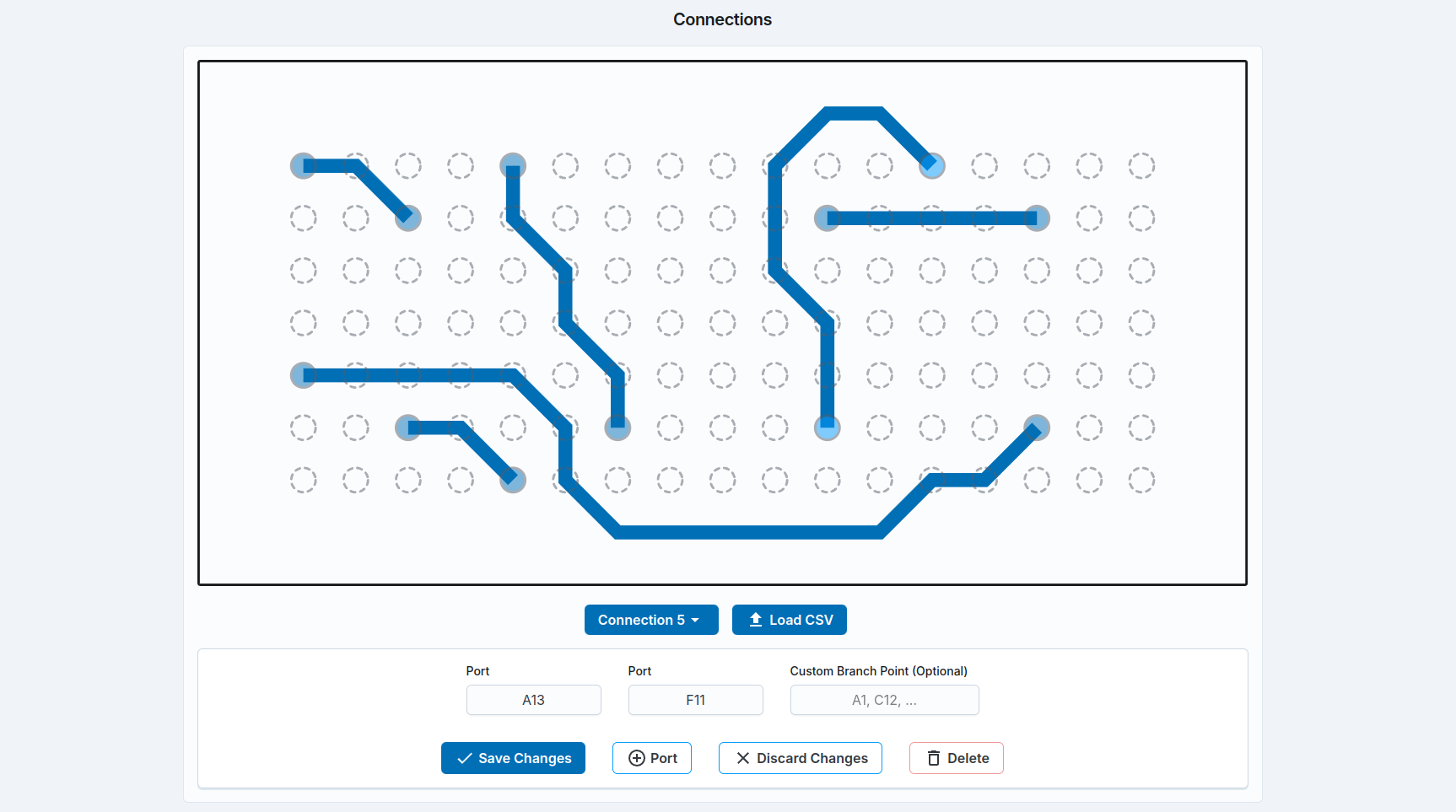
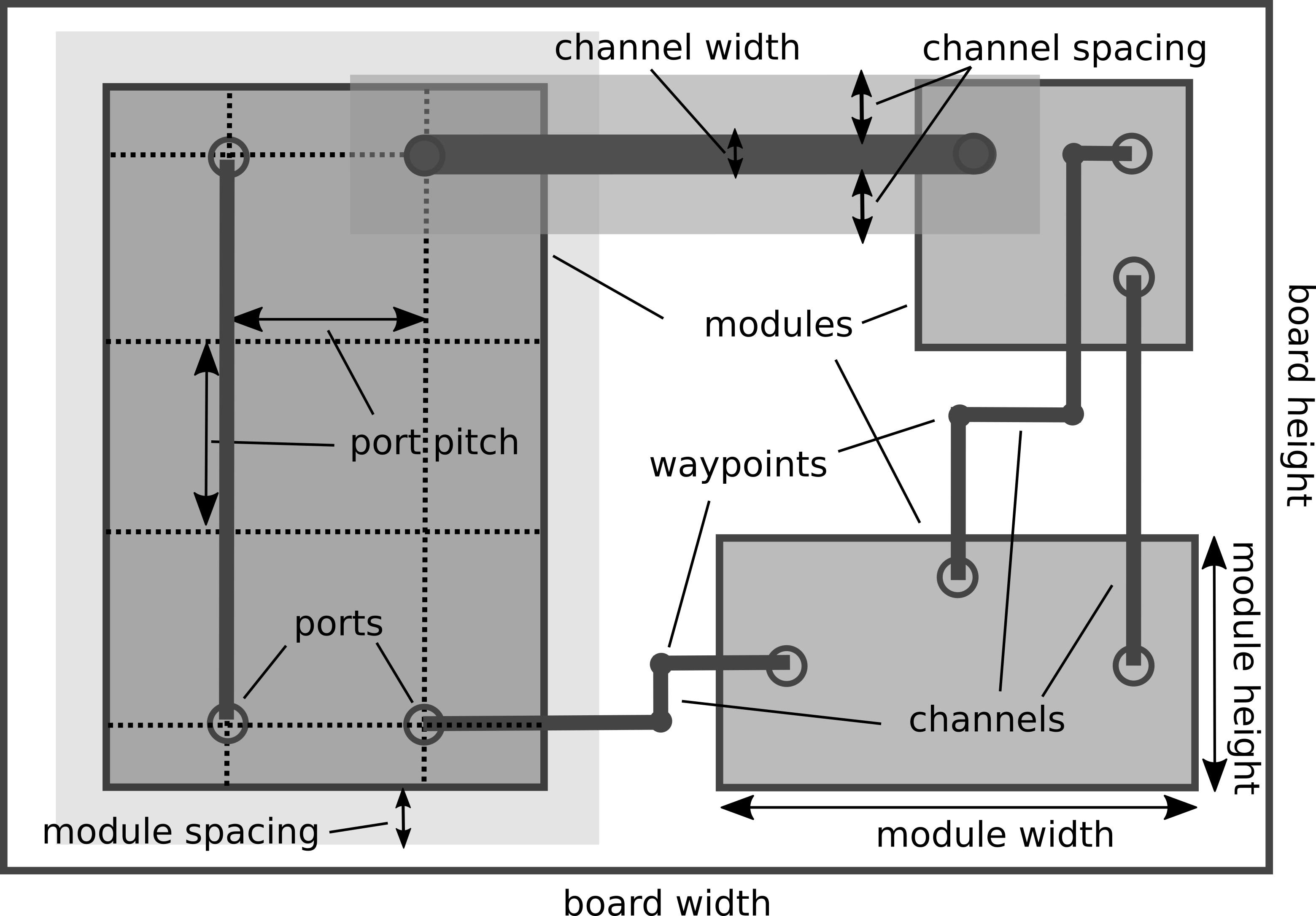
The MMFT Routing Block Tool is a tool that automates the design of channel layouts for ISO-22916-compliant routing blocks. The user interface of the MMFT routing tool offers inputs for geometric parameters such as including pitch, port diameter, channel width and spacing, along with the possibility to create channels between ports in a click-and-point fashion.
Organs-on-Chip Designer
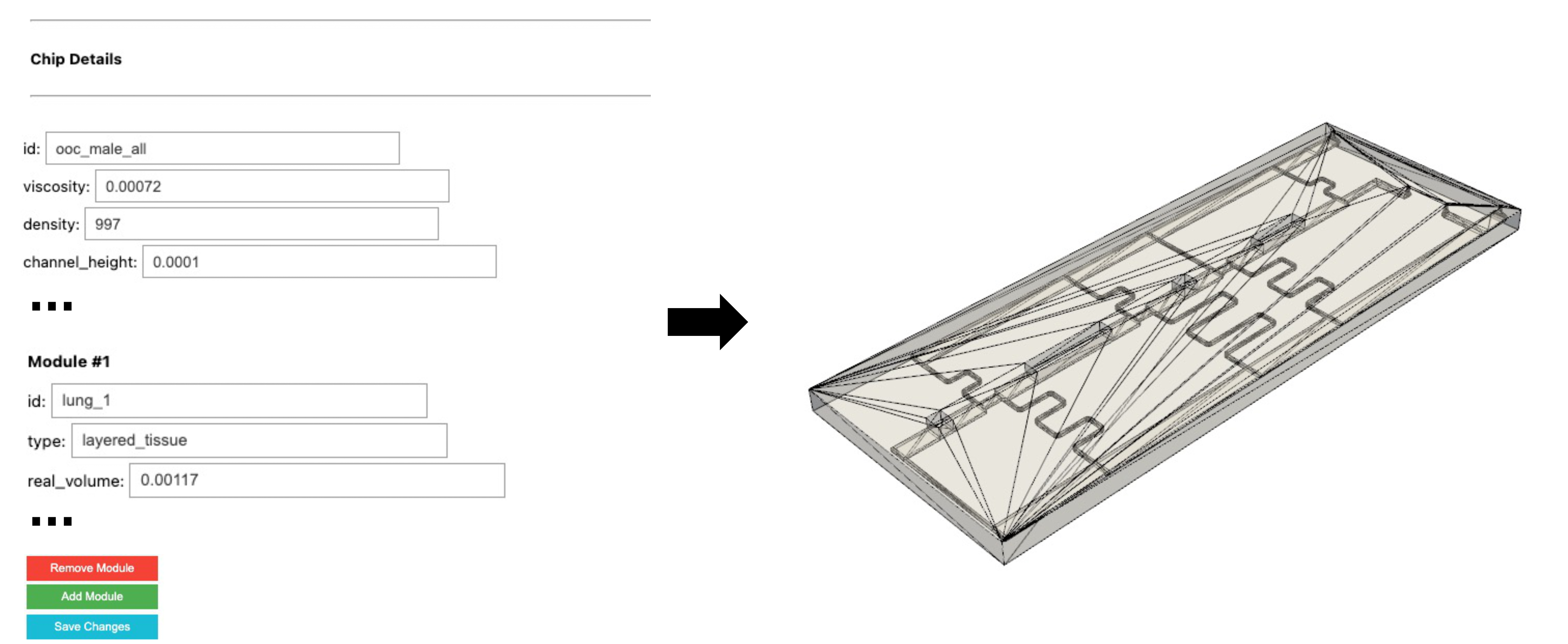
The Organs-on-Chip Designer is a tool that generates an initial organs-on-chip design by considering several aspects, like the size of organ modules, the required shear stress on membranes, the dimensions and geometry of channels, pump pressures, etc. From this, a 3D geometry of the microfluidic channel network for subsequent simulations or the desired device, including the chip specifications for fabrication, can be generated.

Meander Designer
Designers frequently draw similar designs for meander channels in a CAD program like AutoCAD. In order to overcome this manual task, we developed this online tool, which allows to automatically generate meander designs with their needs and fabrication settings.
Gradient Generator
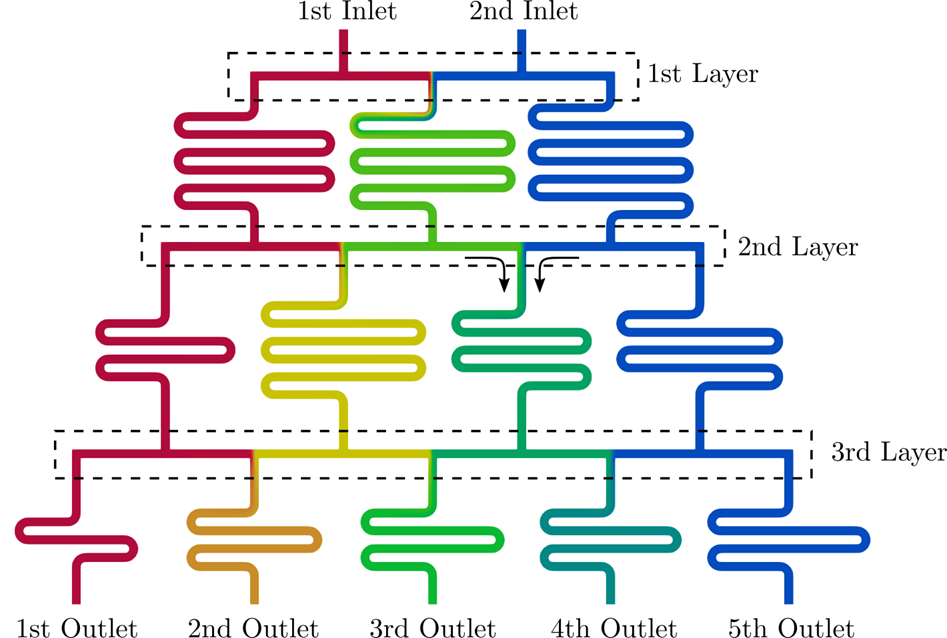
The Gradient Generator allows users to automatically create designs for tree-shaped concentration gradient generators. Such devices are used to mix two fluids with different concentration values and provide various mixtures of these fluids (i.e., mixtures with certain concentration values) at corresponding outlets.
Channel Router
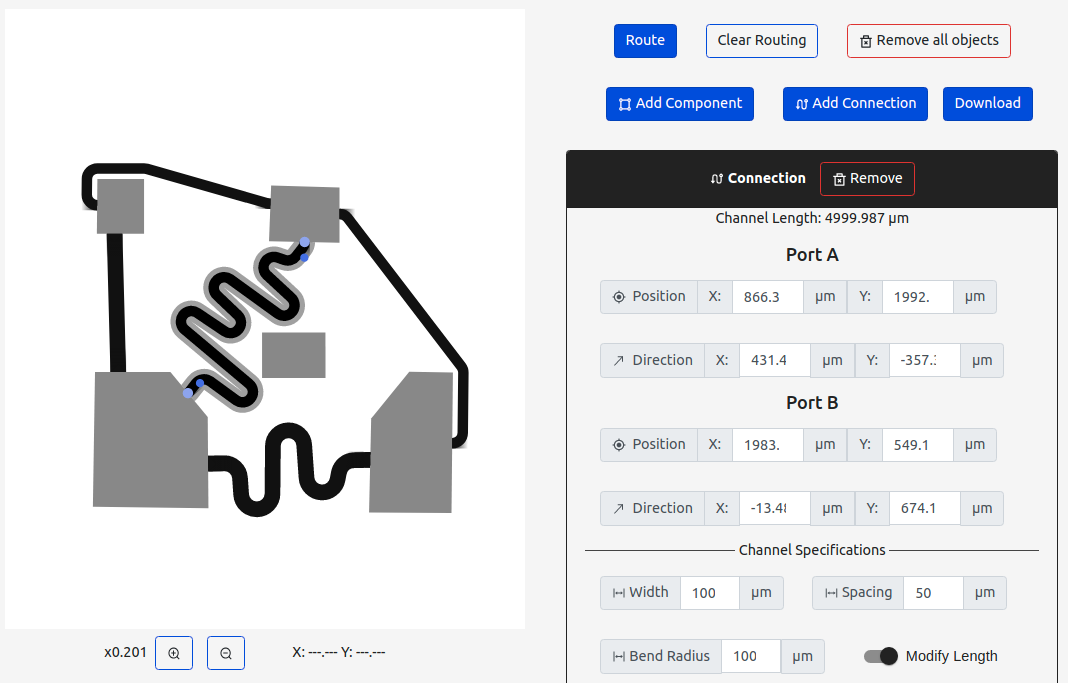
The Channel Router is a tool that lets the user design a routing layout for channel-based microfluidic devices that need to connect multiple parts in a certain way. In particular, it ensures that certain design constraints, such as the distance between channels and corner bend radius, are satisfied.
Simulation
MMFT Simulator
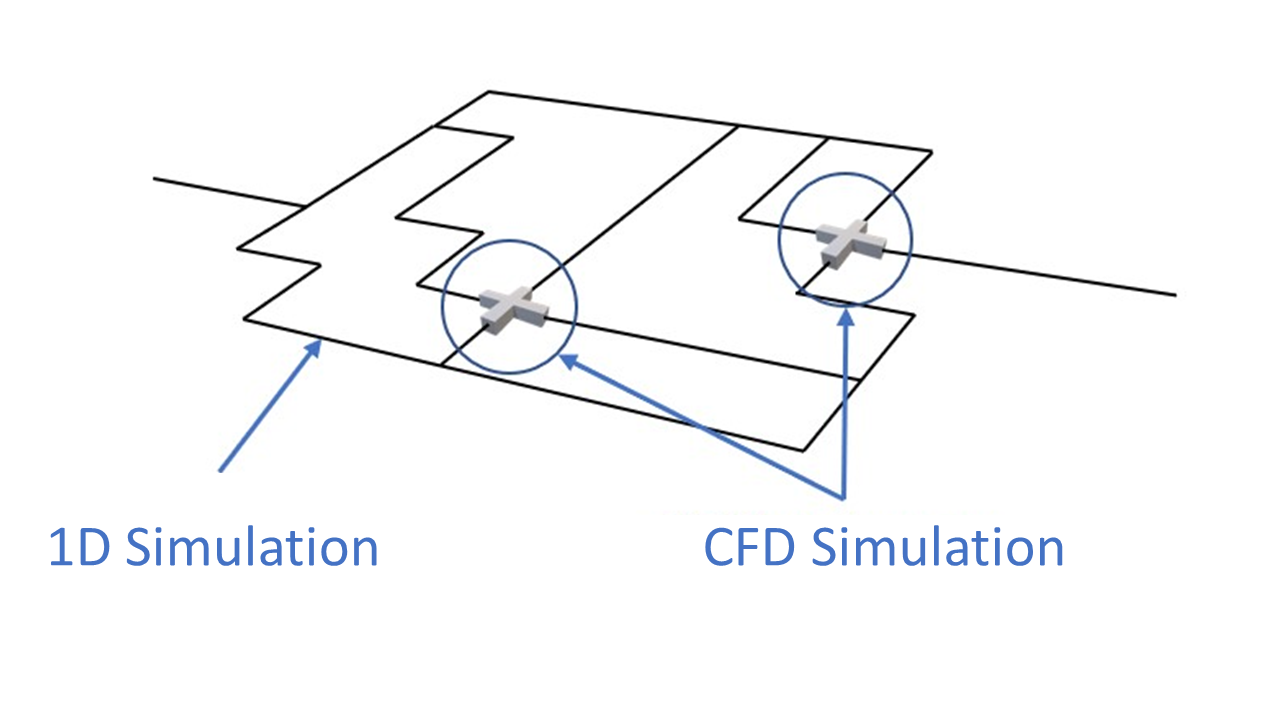
The MMFT Simulator is a library that contains a collection of simulators for closed channel-based microfluidic devices on different levels of abstraction for different applications. Abstract simulations allow interested researchers to efficiently simulate large microfluidic networks. Hybrid simulations exploit the abstract models to accelerate CFD simulations of microfluidic devices without loss of accuracy.
MMFT Simulator GUI
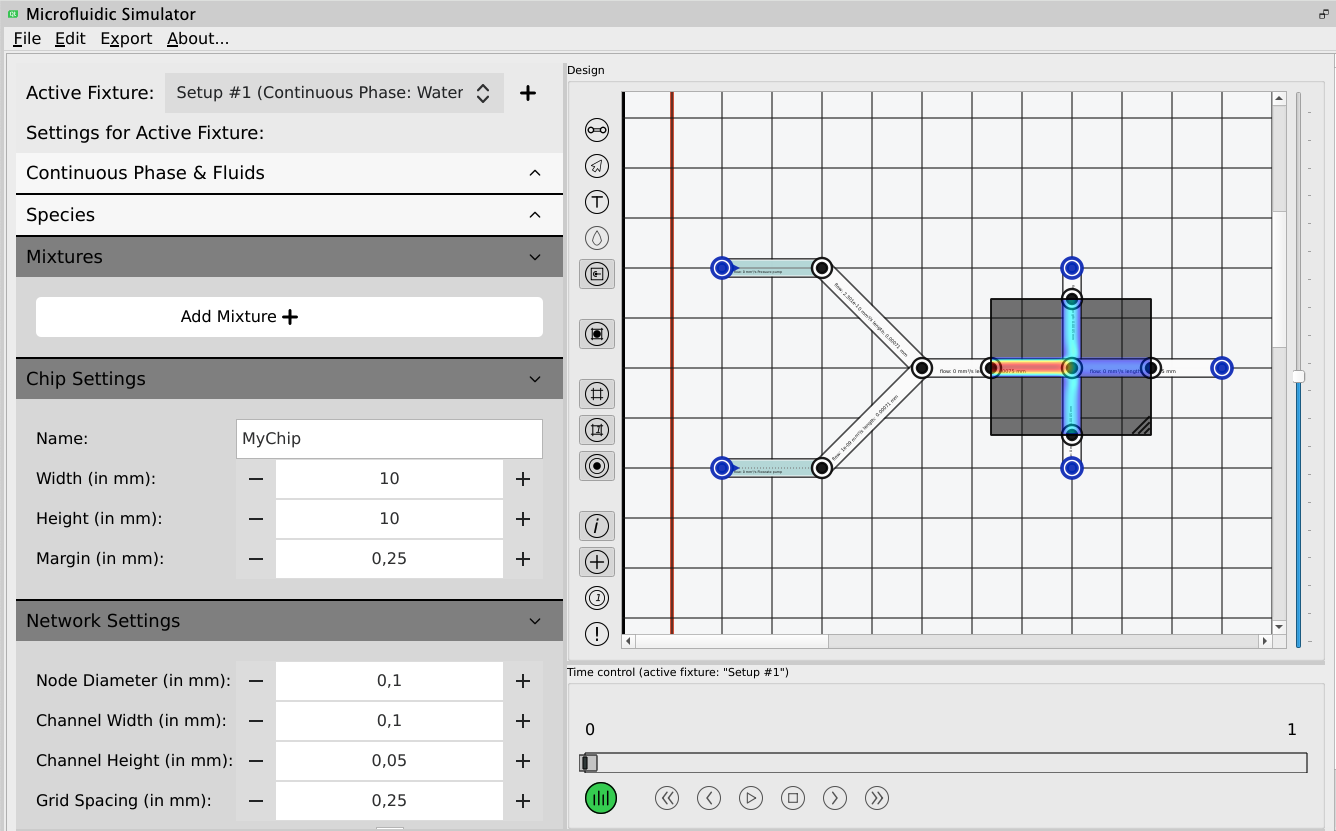
The MMFT Simulator GUI is a graphical user interface designed to make the MMFT simulator more accessible. It provides a simple tool for quickly specifying and modifying microfluidic networks and can then be used to run various types of simulations, such as droplet and mixture simulations, based on the MMFT simulator. The interface conveniently displays the simulation results. Please note that the tool is still in a prototypical stage, and its usability is not yet fully optimized.
Fabrication
MMFT OpenSLAice
The MMFT OpenSLAice tool is a specialized slicing tool that prepares microfluidic chip designs for masked stereolithography (mSLA) 3D printing. It automatically detects internal microfluidic features, optimizes the orientation of the device, and dynamically adapts the slicing process to reduce fabrication defects such as clogged channels and rough surfaces.

Contact
In case of questions/problems, please contact us through: microfluidics.cda@xcit.tum.de.
More on our work on microfluidics is summarized on this page.
How to Cite
If you are using the Munich Microfluidics Toolkit in your work, we would appreciate it if you acknowledge that by citing the corresponding paper:
@INPROCEEDINGS{iccad_2025_mmft,
	AUTHOR        = {R. Wille and P. Ebner and M. Emmerich and M. Takken},
	TITLE         = {{The Munich Microfluidics Toolkit: Design Automation and Simulation Tools for Microfluidic Devices}},
	BOOKTITLE     = {International Conference on Computer Aided Design (ICCAD)},
	YEAR          = {2025},
	ADDENDUM	  = {An overview of the toolkit is available at \url{https://www.cda.cit.tum.de/research/microfluidics/mmft/}},
}