Connecting the “who’s who” in quantum computing software
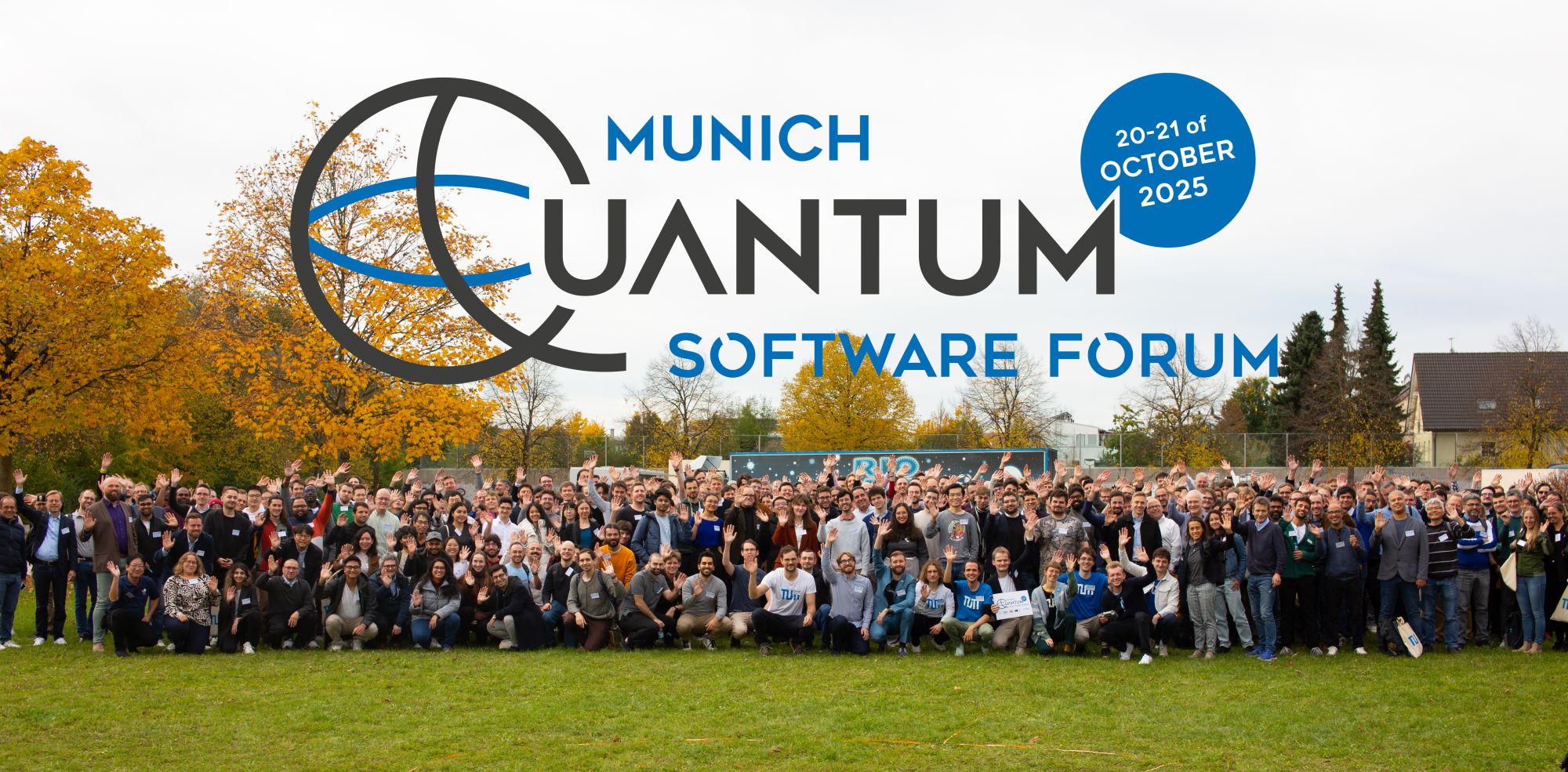
Quantum computing is becoming a reality and, with recent accomplishments, software for this promising technology is becoming key for successful utilization. Numerous players introduce new software solutions frequently. For the third time, in October 2025, the Munich Quantum Software Forum brought the “who’s who” in quantum computing software together for a two-days exchange meeting. This page provides a summary of the event.
For a summary of the 2023/2024-editions of the MQSF, please check out the following pages:




Overview
The forum featured renowned representatives from academia and industry who presented existing software tools as well as recent developments, including representatives from big companies (AWS, IBM, Microsoft, NVIDIA), start-ups (IQM, Munich Quantum Software Company, ParityQC, PsiQuantum, Qedma Quantum Computing, QuEra, QUDORA), and leading scientific organizations (Freie Universität Berlin, RIKEN, TU Munich, Unitary Foundation).
Besides this, 42 further software tools and initiatives were presented through brief pitch presentations and poster sessions. The following video provides a brief summary of the event.
Overall, this attracted 350+ participants covering the entire spectrum of the community including:
- Computer scientists, physicists, engineers, and mathematicians
- Representatives from universities and research centers but also start-ups and established companies
- Graduate students, PhD students, and postdocs but also junior developers, senior developers, and managers
- Long-term quantum computing “veterans” and beginners
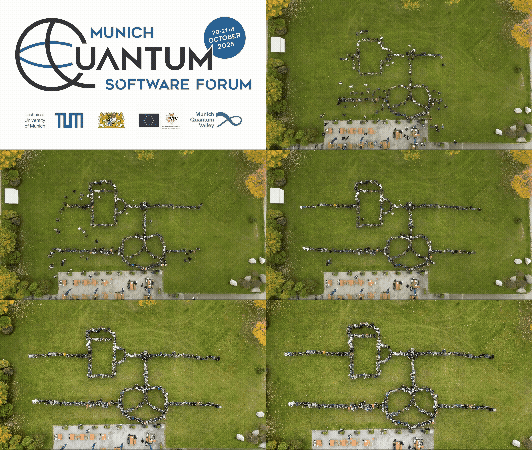
- Expert beer and pretzel circuit designers
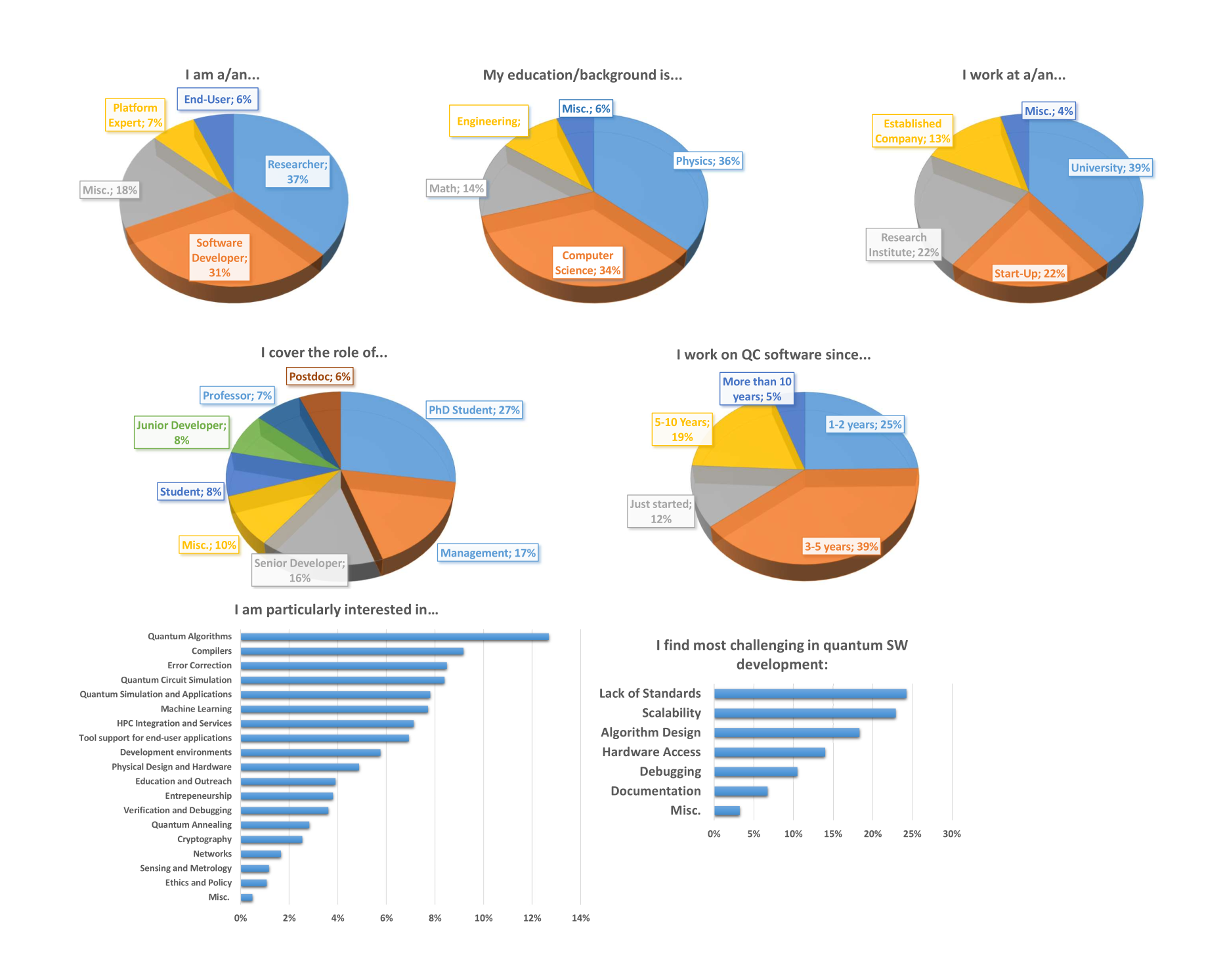
This statistical summary provides a brief overview of the audience.
Talks and Software Pitches
To foster interaction and exchange, the event was planned and executed as a physical event. But due to the huge interest (and the fact that, due to space restrictions, we couldn’t provide everyone with a guaranteed spot), we also tried to record all presentations. While the quality might not always be perfect (and there have been some hiccups), this allows those who couldn’t attend to check out the given presentations (and, of course, all attendees to re-watch them). In addition to the videos, we also provide the presentation slides. To access all that, click on one of the following links or scroll down.
» Brad Lackey (Microsoft): Quantum Resource Estimation
» Jens Eisert (Freie Universität Berlin): New Avenues in Quantum Error Correction and Software
» Phillip Weinberg (QuEra): Bloqade - a Compiler and SDK for Neutral Atom Quantum Computers
» Daniel Borcherding (QUDORA): QUDORA’s QIR-Based Software Stack for Trapped-Ion Quantum Computing
» Inés de Vega (IQM): From NISQ to Fault Tolerance: An Open Architecture for Quantum Innovation
» Miwako Tsuji (RIKEN): High-Performance Computing and Quantum Computing in Japan
» Ali Javadi (IBM): Compilation for a Bicycle Architecture
» Austin Fowler: TQEC - Optimizing and Simulating Lattice Surgery
» Software Pitch Presentations
Opening
The event was opened by Robert Wille.
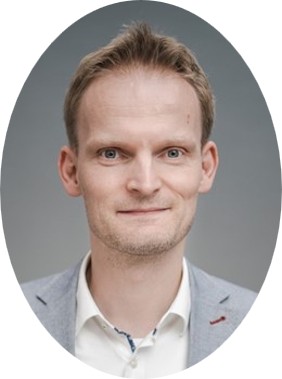
Biography: Robert Wille is a Full and Distinguished Professor at the Technical University of Munich, Germany, Co-Founder and CEO of the Munich Quantum Software Company (CEO), as well as Scientific Director for Quantum Computing at the Software Competence Center Hagenberg, Austria (a technology transfer company with 100 employees). His passion for Computer Science took him into the lecture halls of various universities. In the research lab, he is reaching out to explore how future computers may work and shall be designed. This frequently let him cross disciplines and engage in topics including Electrical Engineering, Physics, Biology, and more.
Slides: Click here to download (3.5 MB)
Michał Stęchły
Title: PsiQuantum Construct: A Revolutionary Platform for Developing FTQC Quantum Applications
Abstract: The development of applications for fault-tolerant quantum computers faces two key challenges. First, the current ecosystem includes only a small number of well-motivated applications. Second, even for these few applications, there is a lack of fully executable, end-to-end implementations that can be used to guide practical development. In this talk, we introduce Construct, a software platform designed to address both of these challenges. Construct provides an integrated environment for quantum application development, supporting the entire pipeline—from high-level algorithm design to low-level circuit compilation. It includes tools for resource estimation and optimization, interactive circuit design and visualization, debugging and backends for compiling to fault-tolerant representations. By enabling complete, executable workflows, Construct not only helps bridge the gap between quantum algorithm theory and scalable implementation, but makes developing quantum applications easier, faster and much more enjoyable.
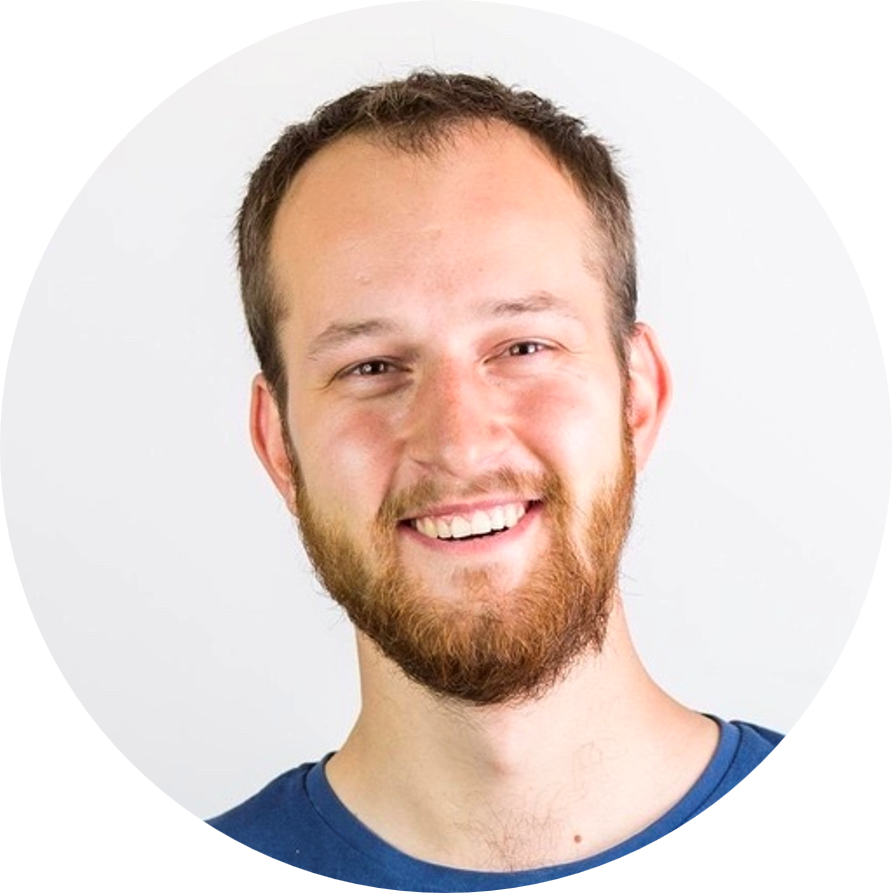
Biography: Michał Stęchły is a Senior Quantum Software Engineer at PsiQuantum. He is lead developer of Bartiq, a tool for performing symbolic QREs. His main interest is building better software tools for quantum computing, through designing better abstractions. Apart from that he’s also involved in various community initiatives and is an author of a blog: Musty Thoughts.
Slides: Click here to download (1.8 MB)
Lukas Burgholzer
Title: Beyond Circuits: Compiling the Next Generation of Quantum Programs with the MQT
Abstract: As quantum computing matures, we are moving beyond simple circuits to complex, structured programs with loops, conditionals, and real-world logic. But how do we efficiently and correctly translate these powerful algorithms into instructions a quantum computer can actually execute? This talk dives into the compiler infrastructure that makes this possible. We will explore how the Munich Quantum Toolkit (MQT) is pioneering the use of modern compiler technologies like MLIR and QIR to build a robust and flexible ecosystem.
I will showcase our latest work, including how we are building bridges within the quantum software ecosystem, and our cutting-edge support for the upcoming QIR 2.0 standard. We will also touch on the crucial role of benchmarking in this new paradigm, ensuring that our compilers are not just feature-rich but also performance-optimized. Join me to see how MQT is trying to stay ahead of the curve—fully compatible with Python 3.14 and Qiskit 2.x—and helping to define the future of quantum software development.
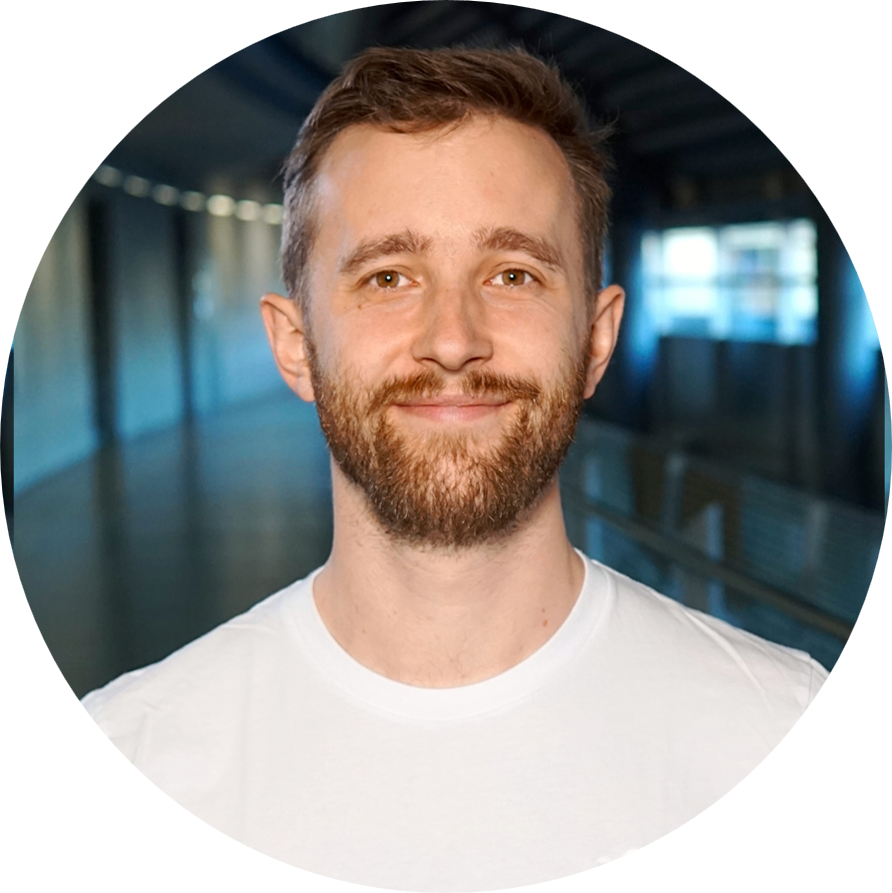
Biography: Lukas Burgholzer is the CTO of the Munich Quantum Software Company, where he is on a mission to build actually useful software for quantum computers. As one of the masterminds behind the Munich Quantum Toolkit (MQT) and a key player in the Munich Quantum Software Stack (MQSS) project, he is dedicated to creating tools that do not just work but work for the community. His work has earned him accolades like the EDAA Outstanding Dissertation Award and the Heinz Zemanek Prize, but he’s most proud of building bridges in the open-source quantum world.
Slides: Click here to download (5.3 MB)
Nathan Shammah
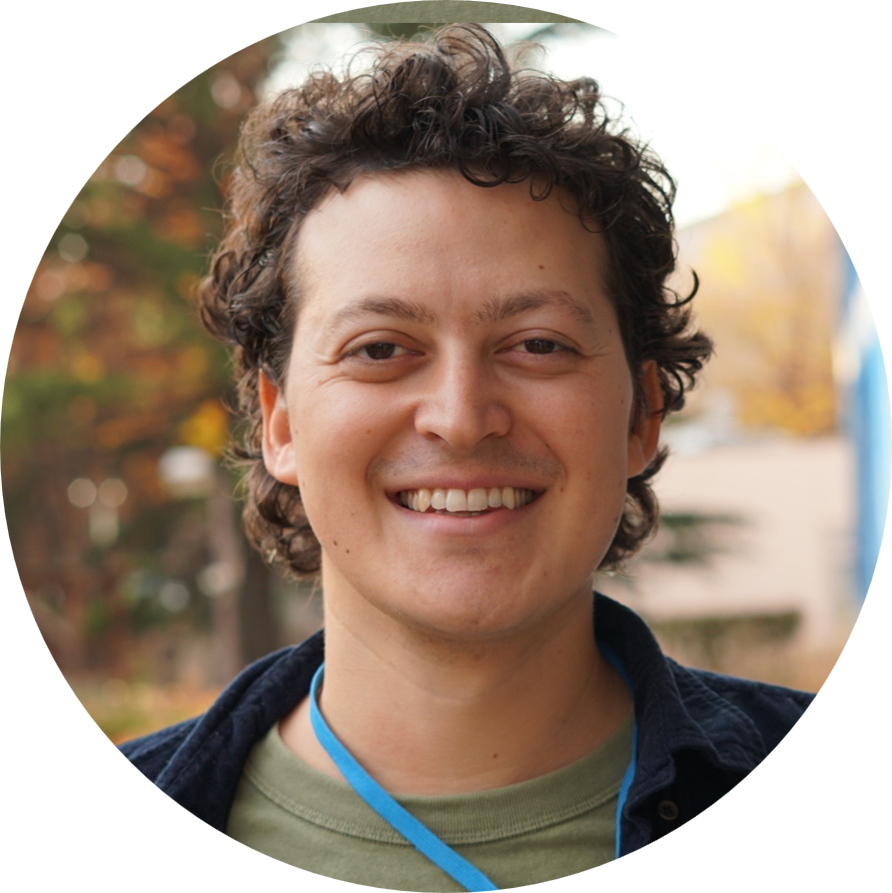
Title: Challenges in Quantum Software and Possible Open-Source Solutions
Abstract: This talk provides an overview of the current quantum software ecosystem and highlights current challenges, from software duplication to lack of reproducibility in experimental results. Possible solutions in benchmarking, compilation, hardware access and operation are provided. The Unitary Found community and non-profit development of public commons is illustrated.
Biography: Nathan Shammah is the Chief Technology Officer at Unitary Foundation. He leads the technical staff performing open source research and software development. He is a contributor and admin of the QuTiP project and other projects. Nathan holds a PhD from the University of Southampton.
Brad Lackey
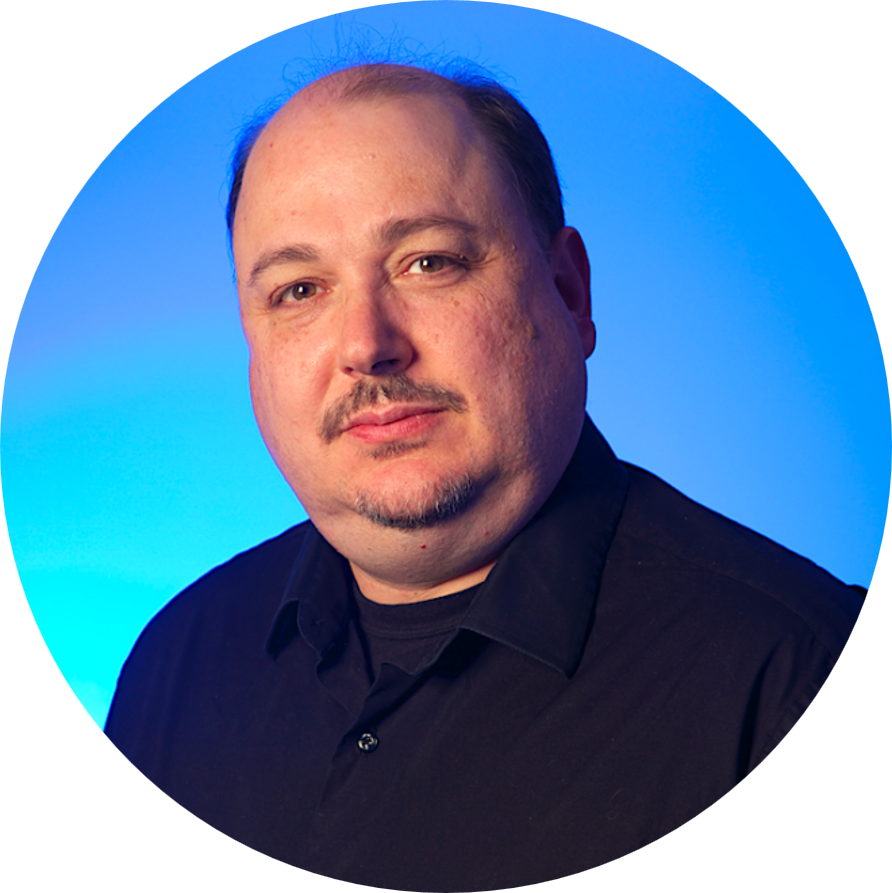
Title: Quantum Resource Estimation
Abstract: At Microsoft, we make our algorithmic optimizations and architectural decisions based on full-stack quantum resource estimation. In this talk, I’ll share our approach to modeling the different parts of the quantum stack, from qubit layout and error correction to creating magic states and building physical qubits. I’ll also demo our key tool, the Azure Quantum Resource Estimator, on several examples of quantum algorithms at scale, and showcase another of our tools for generating models for resource estimation.
Biography: Dr. Brad Lackey is a quantum architect at Microsoft tasked with the design of the quantum drivers and engines for Microsoft’s and its partners’ quantum computers. He is trained as a mathematician, and pursues research in quantum algorithms, quantum error correction, holography and quantum gravity, and quantum type theories.
Martin Schuetz
Title: The Search for Applications of Quantum Computing in Industry – Introducing the Amazon Advanced Solutions Lab
Abstract: The Amazon Advanced Solutions Lab (ASL) is a team of scientists whose mission is to help our customers accelerate their understanding and use of emerging technologies such as quantum computing. In this presentation I will showcase a few examples how we leverage quantum and related advanced algorithms to solve some of our customers’ hardest problems, designing and building quantum computing, machine learning and optimization solutions on AWS.
Biography: Martin is a Principal Research Scientist at the Amazon Advanced Solutions Lab. Martin has worked several years as an academic researcher with a focus on quantum simulation and quantum optics, at ETH Zurich, the Max-Planck-Institute for Quantum Optics and Harvard University. Today Martin is working with customers to help solve some of their hardest problems, designing and building quantum computing, machine learning and optimization solutions on AWS.
Slides: Click here to download (15.3 MB)
Jens Eisert

Title: New Avenues in Quantum Error Correction and Software
Abstract: Quantum computers promise advantages for computational tasks over classical supercomputers. This promise can only be fulfilled, however, if suitable means are employed to properly deal with unavoidable errors in an actual implementation. Quantum error correction is able to detect and correct errors without revealing any logical information. While this is by no means a new idea, recent years have seen enormous progress in the field. Quantum error mitigation aims at dealing with noise mostly on the level of classical post-processing but has its limits.
This short talk will discuss some new developments in quantum error correction. Emphasis will be placed on the design of new Floquet code, accompanied by new kinds of graphical calculi. Importantly, we will also see how effective decoders can be devised for quantum LDPC codes, overcoming one of the major bottlenecks in the field. The most important point—the meta-message—of this talk is that research in quantum error correction has reached a stage where insights from quantum information theory, physical desiderata, and classical software tools must come together to enable substantial progress.
Biography: Jens Eisert is a theoretical physicist at Freie Universität Berlin, specializing in quantum computing and the study of complex quantum systems. He is also affiliated with the Helmholtz Center Berlin and the Fraunhofer Heinrich Hertz Institute. His research in quantum information science bridges physics, mathematics, and computer science, and is driven by both fundamental questions and practical applications. For his contributions, he has received numerous honors, including an ERC Advanced Grant, an ERC Consolidator Grant, a EURYI Award (the predecessor of the ERC Starting Grant), and the Google NISQ Award.
Slides: Click here to download (31.2 MB)
Phillip Weinberg
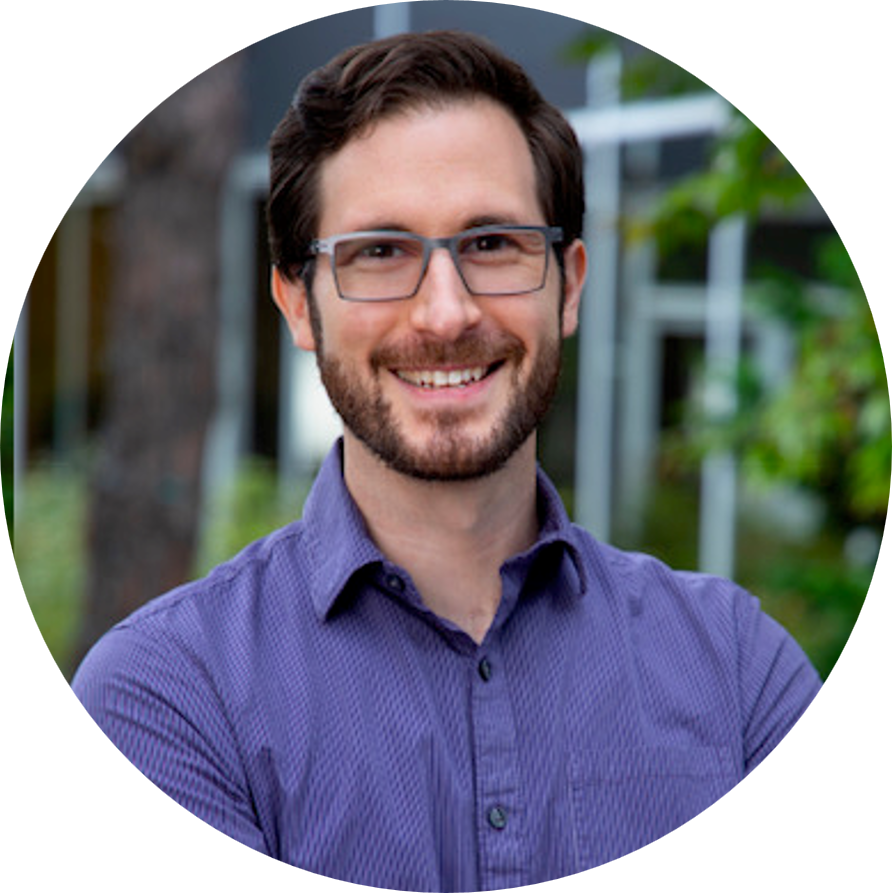
Title: Bloqade: A Compiler and SDK for Neutral Atom Quantum Computers
Abstract: In this talk, we will introduce a new generation of Bloqade, an open-source Python SDK designed for programming neutral atom quantum computers. Built atop Kirin, this next-generation SDK includes two embedded domain-specific languages (eDSLs), allowing users to express quantum programs as high-level circuits or low-level pulse-like programming for atom shuttling and gates. Both languages can also express classical control flow and have a scientist-first compiler toolchain to accompany them.
Biography: Phillip Weinberg is a Senior Scientific Software Engineer, QuEra Computing, working at QuEra since 2022. He has major contributions to QuEra’s SDK Bloqade. Recently, he is working on language design and compilation for QuEra’s digital quantum computers.
Slides: Click here to download (2.1 MB)
Daniel Borcherding

Title: QUDORA’s QIR-Based Software Stack for Trapped-Ion Quantum Computing
Abstract: This talk presents an overview of QUDORA’s latest developments and the role of our QIR-based software stack in enabling them. QUDORA Technologies is building trapped-ion quantum computers with a QCCD architecture and its unique Near Field Quantum Control (NFQC) technology, enabling high-fidelity operations. Our software stack spans from job preparation to execution, with the aim of minimizing ion movement, reducing noise impacts, and enabling low-latency hybrid quantum–classical computation.
Through the QUDORA Cloud, users can already access our emulator, which incorporates a detailed noise model and is tightly integrated into the entire software stack. This provides researchers with a unique opportunity to explore hybrid quantum–classical algorithms in a realistic environment, accelerating the development of applications that benefit from the connectivity, coherence time, and scalability of our trapped-ion platform.
Biography: I am Daniel Borcherding, a theoretical physicist turned software leader, passionate about solving complex problems. After a PhD in integrable quantum systems, I gained experience as a software developer and team lead in the industry and at the quantum valley lower saxony (QVLS). Now, as head of quantum software at QUDORA Technologies, my team and I are turning cutting-edge physics into reliable machines.
Slides: Click here to download (1 MB)
Inés de Vega
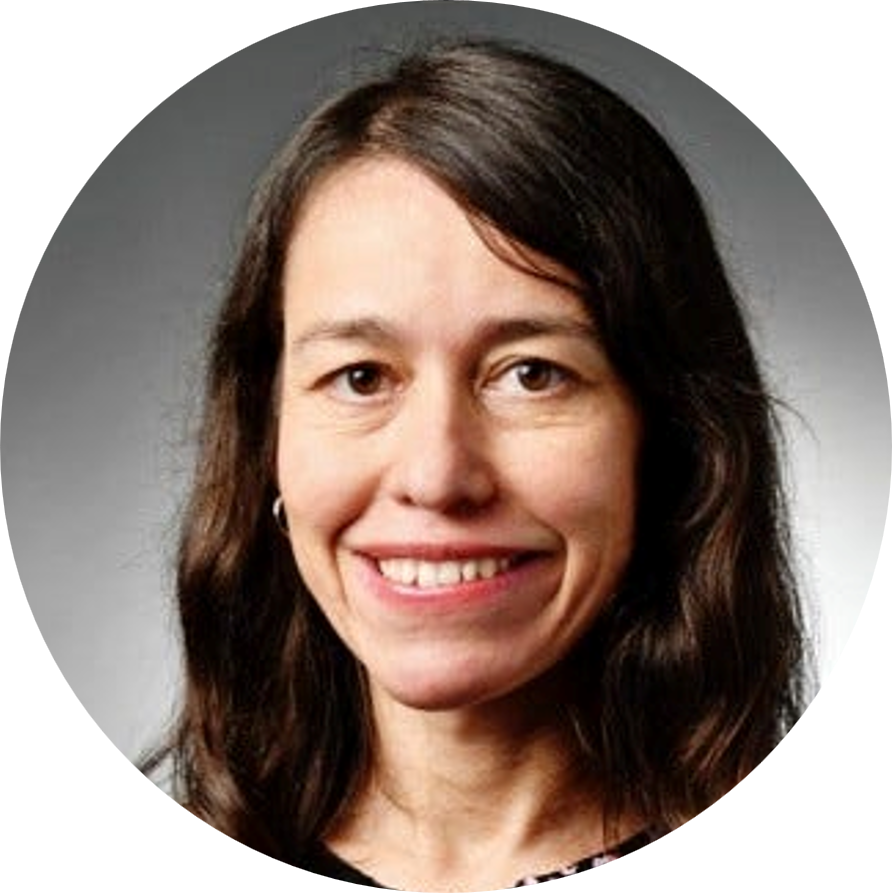
Title: From NISQ to Fault Tolerance: An Open Architecture for Quantum Innovation
Abstract: IQM is advancing from today’s NISQ devices toward scalable, fault-tolerant quantum computers on the path to one million qubits. Our strategy combines high-fidelity hardware with novel error correction codes and architectures that dramatically reduce overheads, enabling fault tolerance in the future. Alongside this, we provide open interfaces that make our systems valuable research tools today, and future platforms for industry-scale applications. This talk will share our roadmap, highlighting milestones in error correction and system design.
Biography: Dr. Inés de Vega is Vice President of Quantum Solutions at IQM Quantum Computers, a global leader in building scalable quantum systems. She leads a team developing quantum algorithms across diverse applications, as well as advanced error correction codes and hardware architectures for their efficient implementation. Before joining IQM, Inés pursued research at leading institutions including the Max Planck Institute of Quantum Optics, the University of Ulm, and Ludwig Maximilian University of Munich, where she remains affiliated with the Department of Theoretical Nanophysics.
Slides: Click here to download (3.9 MB)
Khaldoon Ghanem

Title: Accelerating Quantum Computing Simulations with GPUs: Principles, Practices, and Performance
Abstract: Simulating quantum computers on classical hardware is vital for developing algorithms, validating hardware, and advancing quantum software. As quantum systems scale, classical simulation becomes increasingly demanding. This talk explores how GPUs, combined with NVIDIA’s cuQuantum and CUDA-Q frameworks, can accelerate quantum simulations. We’ll cover the principles of statevector simulation, key optimization techniques, and strategies for scaling across multi-GPU and multi-node systems. Performance benchmarks will illustrate how GPU acceleration can push the limits of classically simulated quantum systems.
Biography: Khaldoon Ghanem is a senior developer technology engineer in quantum computing at Nvidia. He holds a Ph.D. in computational quantum physics from RWTH Aachen University, completed in collaboration with Juelich Supercomputing Center. Before joining NVIDIA, he worked as a researcher at Quantinuum, developing quantum algorithms for condensed matter physics. He previously spent several years at the Max Planck Institute in Stuttgart, focusing on large-scale quantum Monte Carlo simulations.
Slides: Click here to download (1.4 MB)
Netanel Lindner
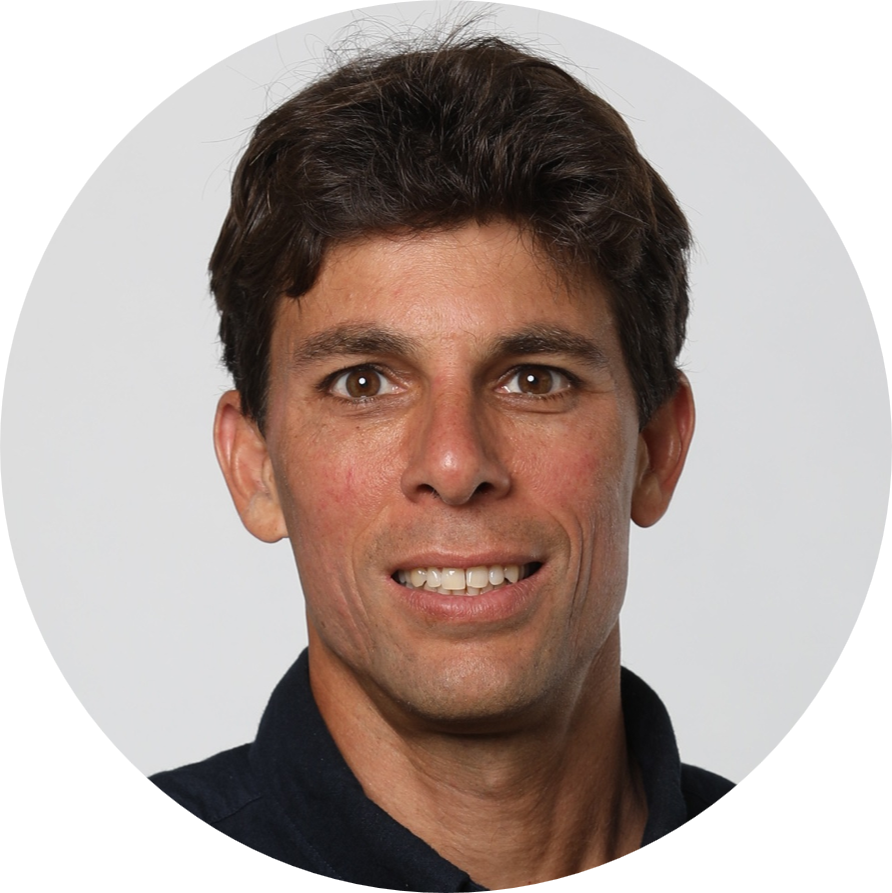
Title: Reliable High-Accuracy Error Mitigation for Large-Scale Quantum Circuits
Abstract: Hardware errors remain the primary obstacle to realizing the full potential of quantum computers. The current go-to approach for executing large-scale quantum circuits is error mitigation, which eliminates the impact of errors at the cost of additional runtime. Yet, most existing approaches either rely on uncontrolled heuristics or require prohibitive QPU time that makes them impractical for large-scale circuit execution. In this talk, I will introduce QESEM, a quantum error suppression and error mitigation software designed to deliver accurate and reliable results from large-scale quantum circuits. I will present recent results obtained with QESEM across diverse applications, outline its core innovations and architecture, and highlight its flexibility in deployment. Looking forward, I will argue that error mitigation methods will likely be the first to enable quantum advantage and will remain essential even as error correction becomes practical. I will conclude with a perspective on QESEM’s projected performance on near-term and future error-corrected devices, and its implications for scaling toward practical quantum advantage.
Biography: Netanel Lindner is a professor of theoretical physics at the Technion – Israel Institute of Technology, and Chief Technology Officer and Co-Founder of Qedma. He received his Ph.D. from the Technion. In 2019 he started a postdoctoral position at Caltech, and in 2013 joined the faculty of the Physics Department at the Technion. Netanel made pioneering contributions in a wide range of fields, including photonic and topological quantum computing and topological phenomena in non-equilibrium quantum matter, and received several important awards including the Clore Fellowship, Rothschild Fellowship, the Krill prize by the Wolf foundation, Marie Curie integration grant, the DIP German-Israeli Project Cooperation Grant, and the ERC starter grant. In 2020, Netanel co-founded Qedma, a startup company developing software solutions for eliminating the effects of errors in quantum computers.
Slides: Click here
Miwako Tsuji
Title: High-Performance Computing and Quantum Computing in Japan
Abstract: Quantum computers operate on fundamentally different principles from conventional computers and are expected to solve problems previously considered intractable. Supercomputers, on the other hand, enable groundbreaking research, strengthen industrial competitiveness, and address societal challenges through large-scale simulations and AI. Quantum-HPC hybrid computing integrates these distinct systems to broaden the scope of feasible computations and is anticipated to accelerate the advancement of quantum computers, which are still in the development stage. This presentation introduces ongoing quantum-HPC hybrid efforts in Japan. In particular, we focus on an overview of the quantum-HPC hybrid platform that connects the supercomputer Fugaku with quantum computers, as well as the software infrastructure required to realize this integration.
Biography: Miwako Tsuji is a professor of Center for Computational Sciences, University of Tsukuba, and a unit leader at the RIKEN Center for Computational Science. She received master and PhD degrees from the Information Science and Technology department at Hokkaido University. From 2007 to 2013, she worked in multiple roles at the University of Hokkaido, University of Tokyo, University of Tsukuba, and Universite de Versailles Saint-Quentin-en-Yvelines. At RIKEN, she is a member of the Flagship 2020 project, which conducted the design and development of the supercomputer Fugaku. Her current research interests are programming and performance models for large-scale high-performance computing. She is a coauthor of the ACM Gordon Bell Prize in 2011. She is one of the Associate Directors of the Arm HPC User Group organization.
Slides: Click here to download (6.5 MB)
Ali Javadi

Title: Compilation for a Bicycle Architecture
Abstract: Error correction with high-rate quantum LDPC codes have recently gained traction as they can dramatically reduce the number of qubits needed to perform useful quantum algorithms. I will present recent progress at IBM on the theory and practice of building modular quantum computers based on bivariate bicycle codes. These are a class of LDPC codes which combine a high rate of encoding with thin planar connectivity, fast decoding, and a high threshold. In particular I will describe a modular architecture based on these codes and a software that allows users to compile arbitrary circuits for such an architecture and perform detailed resource estimates.
Biography: I am a Principal Research Scientist at IBM where I helped create Qiskit as the world’s most popular quantum SDK. My research interests lie in circuit compilation and using tools from error mitigation / correction to push the boundaries of computation on realistic quantum hardware. I am a recipient of the IEEE QTC Early Career Award.
Slides: Click here to download (1.2 MB)
Wolfgang Lechner
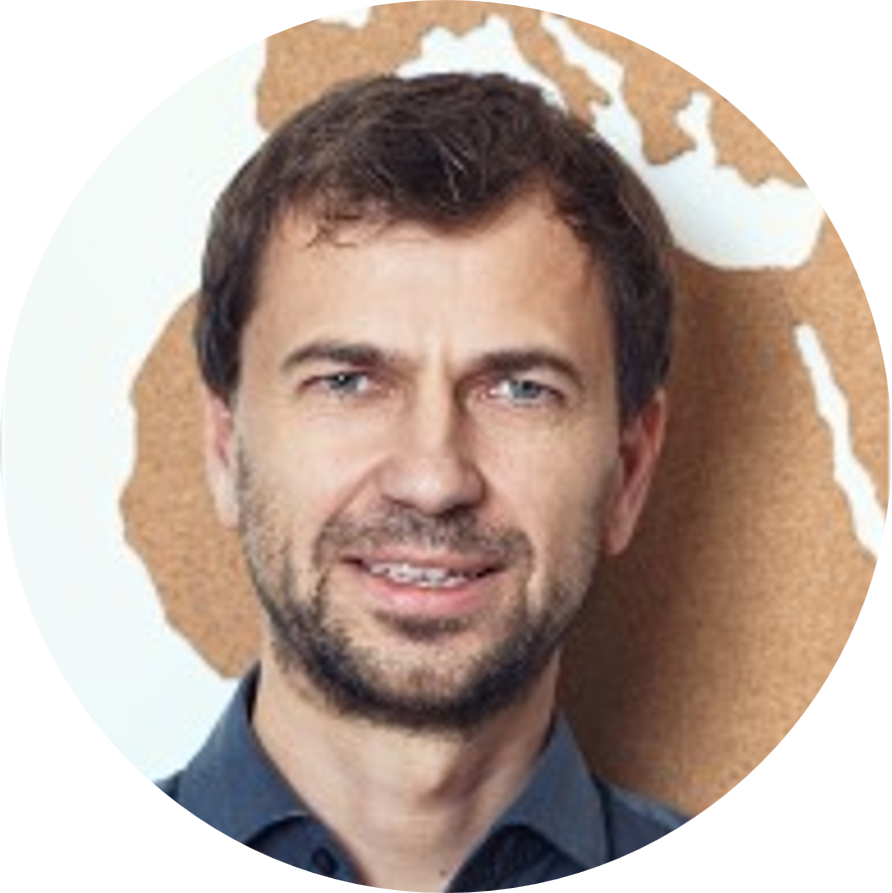
Title: Connectivity Aware Synthesis of Quantum Algorithms using the Parity Architecture
Abstract: The Parity Architecture introduces a general method for the implementation of quantum algorithms that optimizes both gate count and circuit depth. Our approach introduces connectivity-adapted CNOT-based building blocks called Parity Twine chains. It outperforms all known state-of-the art methods for implementing prominent quantum algorithms such as the quantum Fourier transform or the Quantum Approximate Optimization Algorithm across a wide range of quantum hardware, including linear, square-grid, hexagonal, ladder and all-to-all connected devices. For specific cases, optimality of the Parity approach was rigorously proven.
Biography: Wolfgang Lechner studied physics and computer science in Vienna where he received his PhD in computational physics in 2009 at the University of Vienna. After a PostDoc at the University Amsterdam he joined the group of Peter Zoller from 2012 until he became Assistant Professor in 2016. After Habilitation in 2019 he became full Professor in 2023 at the University of Innsbruck. He founded the company ParityQC in 2020 and is the co-CEO since then. Wolfgang Lechner is most known for the invention of the Parity Architecture, a novel architecture for quantum computers where physical qubits represent the relative information between logical quantum bits. He authored more than 90 publications and 15 patents in quantum computing.
Slides: Click here to download (4.6 MB)
Austin Fowler
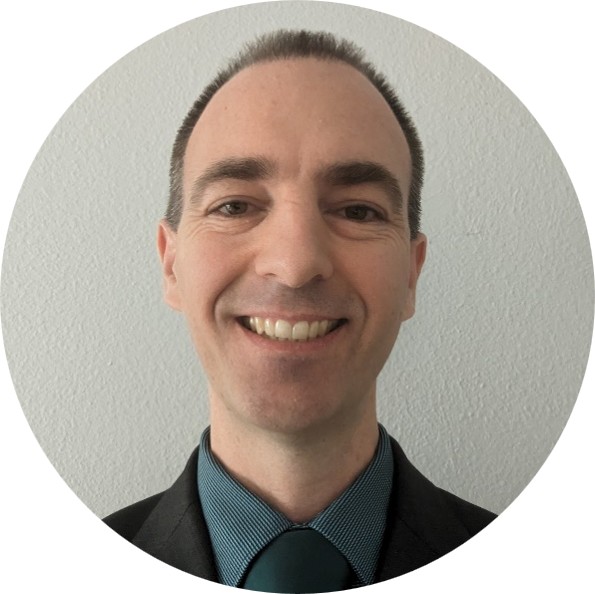
Title: TQEC: Optimizing and Simulating Lattice Surgery
Abstract: Lattice surgery has moved far beyond the framework of statically located logical qubits with hallways to facilitate interactions. Modern techniques involve converting a quantum circuit to a ZX graph, compressing this, then directly realizing the compressed graph with multi-way lattice surgery junctions arbitrarily oriented in spacetime. This leads to far lower overhead to implement the same computation. We will review the latest developments in this space, and show how to simulate them using the open source TQEC tool.
Biography: Austin Fowler is an independent and self funded researcher in quantum computing, and has worked previously for Google, UCSB, the University of Melbourne, and the Institute for Quantum Computing in Waterloo, Canada. He specializes in the surface code, and is committed to open science involving collaboration between people from all nations, and advocating for Opportunity International.
Slides: Click here to download (1.9 MB)
Software Pitches
In addition to the presentations above, 42 further software tools and initiatives were presented at the forum. This was mainly done through poster presentations. In addition to that, each tool/initiative was also introduced through a brief pitch presentation whose recording is available in the videos. You can also access the corresponding presentation slides below.
-
Matti Palomäki (VTT Technical Research Centre of Finland): VTT - Lowering the Barriers for Quantum Computing
-
Élie Gouzien (Alice & Bob): Dynamiqs
-
Quinn Langfitt (Northwestern University): QuantEM: The Quantum Error Management Compiler
-
Giuseppe Bisicchia (University of Pisa & University of Extremadura): QSimBench: Execution-Level Benchmarking for Reproducible Quantum Software Engineering
-
Niklas Steinmann (Fraunhofer): Real-Time Hybrid Computations with Qrisp-JASP
-
Ralf Ramsauer (OTH Regensburg): System-Level Quantum-Accelerator Integration with QAL
-
Mateo Uldemolins (Inria): Graphix: An Open-Source Toolkit for Measurement-Based Quantum Computation
-
Barak Azar (Classiq): Accelerating Quantum Software Development with Classiq
-
Stephen DiAdamo (Qoro Quantum): An End-to-End Software Platform for Distributed Quantum Computing
-
Hiroshi Nakata (Jij Inc.): Unifying Classical and Quantum Solvers for Combinatorial Optimization: Open Framework for Benchmarking and Algorithm Development - Jij Inc.
-
Felix Burt (Imperial College London): DisQCO, Distributed Quantum Circuit Optimisation
-
Stefano Carrazza (University of Milan and INFN Milan): Controlling and Calibrating Quantum Devices Using the Open-Source Framework Qibo
-
Ondřej Lengál (Brno University of Technology): AutoQ: Fully Automated Verification of (Parameterized) Quantum Circuits
-
Stefan Hillmich (SCCH): Quantum Algorithm Engineering: A Hybrid Quantum-Classical Approach to Optimization and Machine Learning
-
Santana Lujan (DLR): On Adding Pulse-Level Support to the Munich Quantum Software Stack
-
Szabolcs Joczík (QCR MTÜ): QCR toolkit
-
Erik Schultheis (DLR): Many-Body Post-Processing of DFT Simulations Using Quantum Algorithms
-
Michael Bauer (Eviden): Turning your HPC Cluster Into a Quantum Emulator with Eviden Qaptiva HPC
-
Frank Phillipson (TNO): The TNO Open-Source Quantum Optimization Toolbox
-
Amir Azzam (Qilimanjaro): QiliSDK: Toolkit for Digital, Analog, and Hybrid Quantum Workflows
-
Jurek Eisinger (Johannes Gutenberg-Universität Mainz): High Level Control for a Shuttling-Based Trapped Ion Quantum Computer
-
Eduardo Henrique Matos Maschio (independent researcher): Quantum Data Types Struct and Logic on H-hat Quantum Programming Language
-
Armin Vollmer (ADDITIVE GmbH): Wolfram Mathematica and the Quantum Computing Framework
-
Benedikt Poggel (Fraunhofer IKS): Enabling Quantum Computing Applications – The QuaST Decision Tree
-
Guido Masella (QPerfect): MIMIQ: Pushing the Boundaries of Quantum Algorithm Emulation with Tensor Networks
-
Adrien Suau (Riverlane): Deltakit — Making QEC Accessible to Everyone
-
Mykola Maksymenko (Haiqu Inc.): Haiqu: Orchestrating the Execution Stack for Utility-Scale Quantum Applications
-
Ran Xue (RWTH Aachen): LoCo Quantum a Low-Coding Cloud Platform
-
Sven Prüfer (DLR): QUEASARS - Quantum Evolving Ansatz Variational Solver
-
Tatiana Sedelnikov (Quantinuum): Guppy: Pythonic Quantum-Classical Programming
-
Costin Iancu (Lawrence Berkeley National Laboratory): BQSKit
-
Niklas Glaser (Walther-Meißner-Institut, BAdW): Closed-Loop Optimization for High-Fidelity Controlled-Z Gate Calibration
-
Albert Frisch (AQT): Teaser on Calibration of Trapped-Ion QC Systems at AQT
-
Manuel Hagelüken (Fraunhofer IPA): fQsim: A Unified Platform for Quantum Simulation of Molecular Systems
-
Matti Palomäki (VTT Technical Research Centre of Finland): VTT QX – Quantum Computing Service for Quantum Benefit
-
Nico Meyer, Periyasamy, Maniraman (Fraunhofer IIS): Quantum Middleware with AI-Enhanced Solutions: Circuit Cutting, Compilation & Error Correction at Fraunhofer IIS
-
Leonardo Disilvestro (Entropica Labs): QEC Lab
-
Timo Scharfe, Oliver Hüttenhofer, Davide Bincoletto (University of Augsburg): Frayed Ends and Sunrise: Tequila-Extended Framework for Electronic Simulations
-
Takafumi Miyanaga (University of Osaka): OQTOPUS: Open Quantum Toolchain for Operators and Users
-
Philipp Seitz (Quantinuum): Tierkreis - An HPC Native Workflow Management System for Asynchronous Hybrid Jobs
-
Tobias Rohe (LMU): A Platform to Discover the Potential of Quantum Computing – the Quantum Computing User Network (QuCUN)
Contact
Prof. Dr. Robert Wille
Technical University of Munich &
Software Competence Center Hagenberg GmbH
E-Mail: robert.wille@tum.de
LinkedIn: @robertwille
Twitter: @rbrtwll
Acknowledgements
The Munich Quantum Software Forum was organized by the Technical University of Munich and supported by the European Research Council (ERC) under the European Union’s Horizon 2020 research and innovation program (grant agreement No. 101001318), the Bavarian State Ministry for Science and Arts through the Distinguished Professorship Program, as well as the Munich Quantum Valley, which is supported by the Bavarian state government with funds from the Hightech Agenda Bayern Plus.